

Problem-Solving ≠ Results
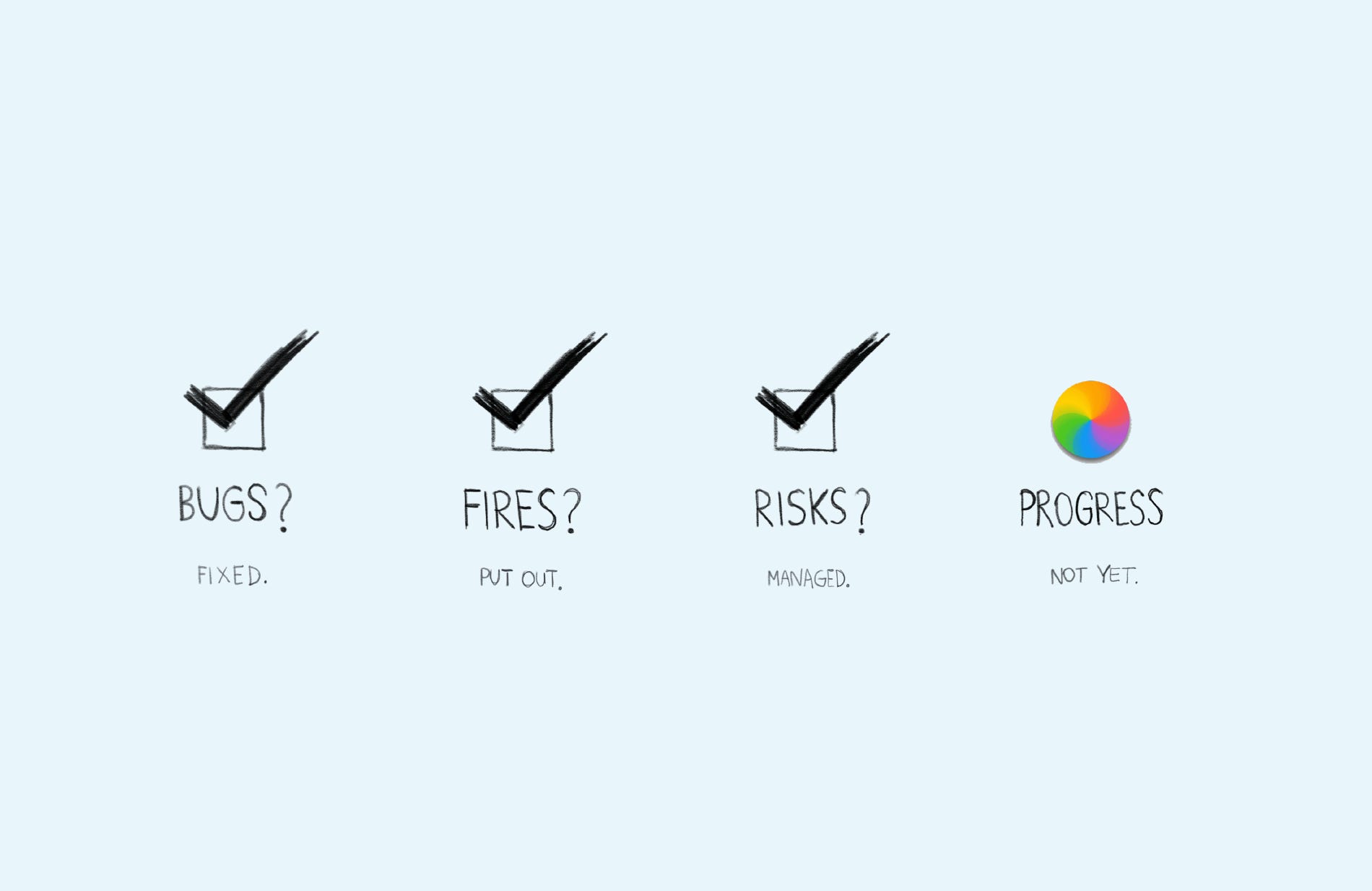

Problem solving is necessary. Every organization needs it.
Bugs? Fixed. Fires? Put out. Risks? Managed.
But somewhere along the way, many teams start mistaking this for progress.
There’s a subtle shift that happens when organizations stay in repair mode too long. Leadership becomes defensive. Energy goes toward preservation instead of creation. And the bar quietly moves from building the future to avoiding mistakes in the present.
That feels responsible, mature, and (often) busy.
But it’s not a growth strategy.

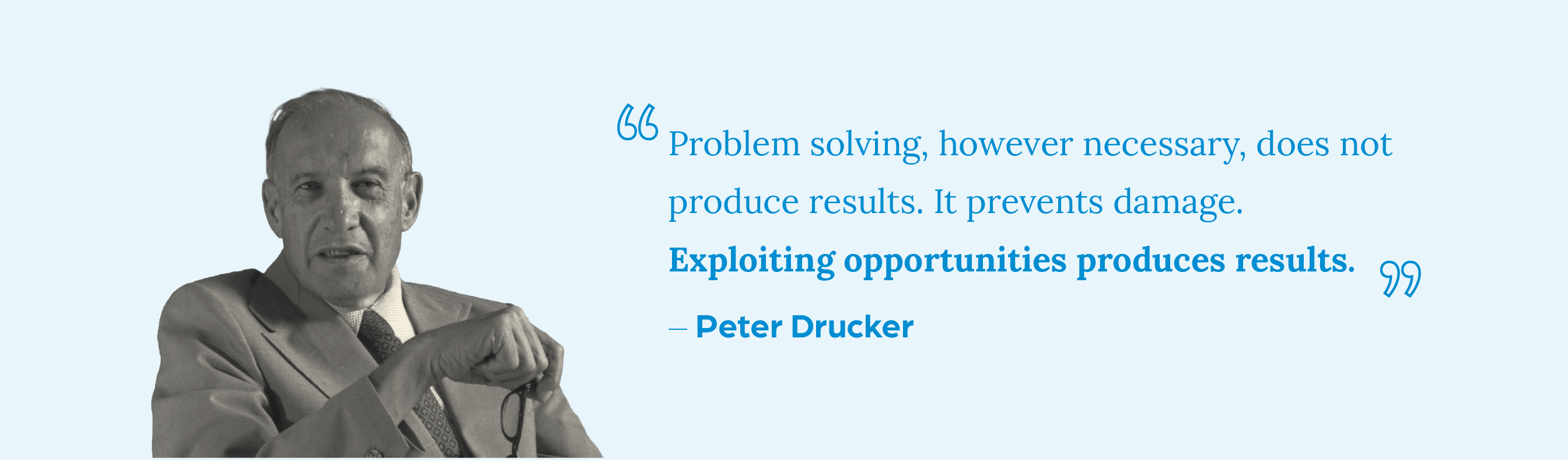
This distinction sits at the center of how Peter Drucker thought about effectiveness.
Drucker argued that organizations drift when leaders become preoccupied with problems instead of opportunities. Problems demand attention; opportunities demand judgment.
Fixing things produces stability. Chasing opportunity produces relevance.
And yet many cultures celebrate maintenance as momentum.
“At least we’re fixing things.”
“At least nothing broke.”
“At least we handled the issue.”
That mindset slowly trains leaders to look backward.
Meetings fill with postmortems. Metrics measure damage avoided. Success becomes the absence of failure. (Trust me: been there, done that).
That’s not negligence.
It’s drift.
And drift is how organizations fall behind without noticing.

Pay attention to what dominates your agenda.
Are you spending most of your time preventing damage or cultivating growth?
What opportunities are being postponed because problems feel more urgent? What future work keeps getting crowded out by maintenance work?
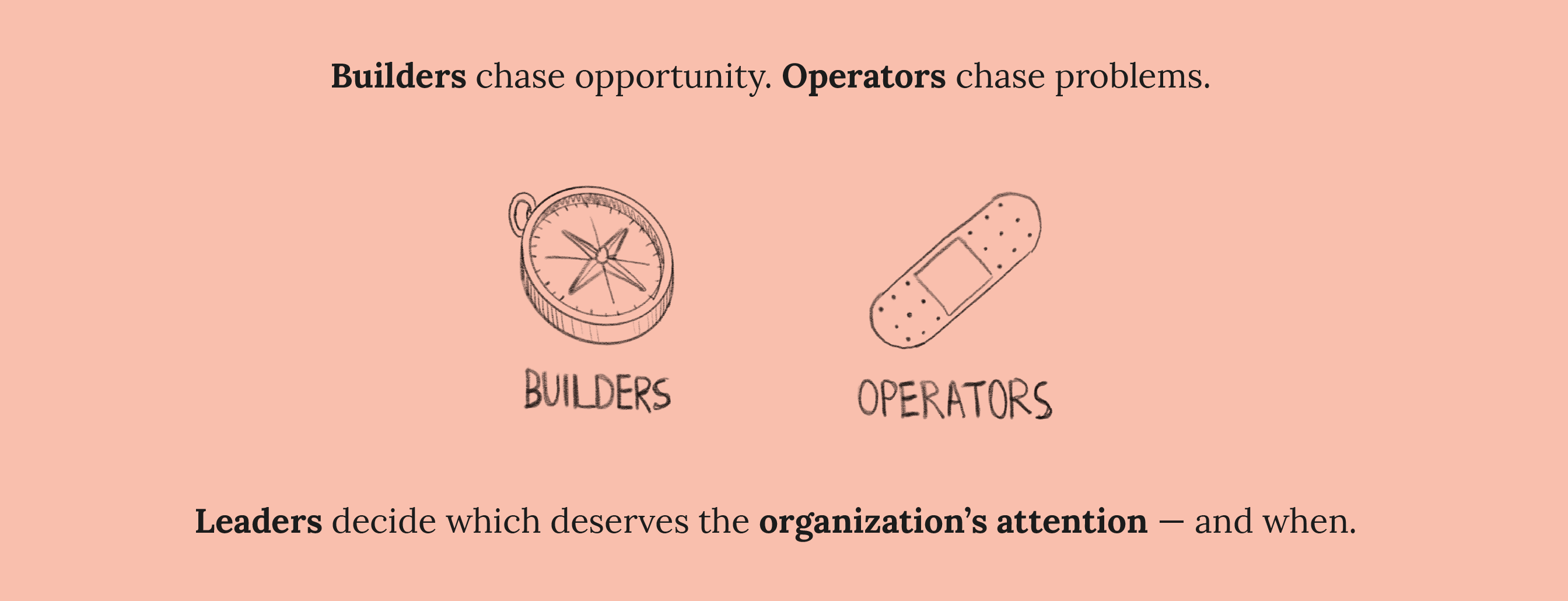
You can’t build a future by defending the present.
And leadership means knowing when it’s time to stop fixing…
and start designing ▶️ forward.